+86- 13066013183






Industry News, 11-12-2026
Flexible packaging — pouches, sachets, rollstocks and shrink films — has quietly become one of the largest and fastest-moving segments of the global packaging industry. While rigid boxes and corrugated cartons still dominate transport and shipping, the shelf is increasingly won by flexible formats, and the numbers explain why.

Market Size: A $350 Billion Segment Growing 4% Annually

Mordor Intelligence values the global flexible packaging market at USD 351.22 billion in 2026, up from USD 336.87 billion in 2025, and projects it will reach USD 432.74 billion by 2031 at a 4.26% CAGR. Global Market Insights gives a narrower cut of the same market at USD 154 billion in 2025 and USD 160.16 billion in 2026, growing at 3.9% toward USD 226.41 billion by 2035. The printed flexible packaging segment alone — the part that matters most for brand owners — was valued at USD 118.95 billion in 2025 and is projected to reach USD 125.87 billion in 2026, climbing to USD 208.05 billion by 2034 at a 6.48% CAGR, according to Fortune Business Insights.

Why Pouches Are Winning

Three structural forces are pushing brands toward flexible formats.

First, shelf appeal. A stand-up pouch can carry full-coverage artwork, window cutouts and matte finishes that simply cannot be reproduced on a corrugated carton. For snacks, pet food, coffee and cosmetics, the pouch is now the default premium format.

Second, logistics efficiency. Flexible film is far lighter than rigid plastic or glass — a 40% to 60% weight reduction over comparable rigid packaging is common — which directly cuts freight cost and carbon footprint. Pouches also ship flat, so warehouse density improves dramatically.

Third, barrier performance. Modern multi-layer films combine oxygen, moisture and UV resistance in a single structure, replacing the glass jar + metal lid + cardboard box triple-packaging of the past.

What Is Holding Growth Back

The biggest friction is recyclability. Multi-layer laminated films are notoriously hard to sort in standard waste streams, which is exactly why the EU's Packaging and Packaging Waste Regulation (PPWR), applying from August 2026, pushes brands toward mono-material films that can be recycled in existing systems. Converters are responding with mono-PE and mono-PP structures that match barrier performance without the laminate problem.

Outlook

Flexible packaging is no longer a niche format for snacks. It is the default choice for DTC brands, e-commerce subscription boxes, cosmetics refills and on-the-go food portions. The market is growing at roughly twice the rate of rigid packaging, and the shift toward mono-material films is making it the fastest-moving battleground in packaging innovation. 
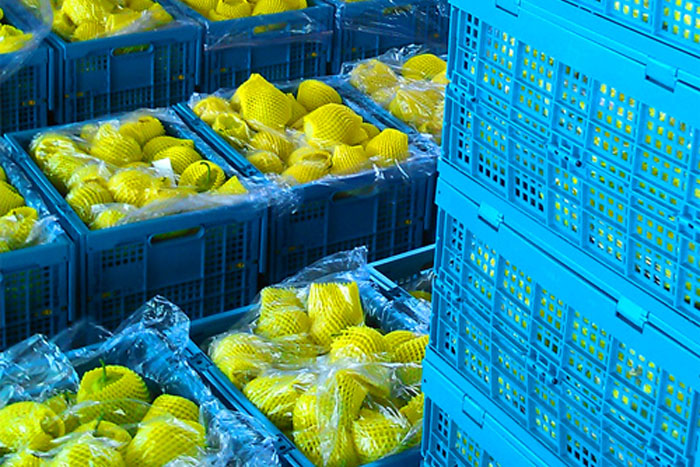
The plastic turnover box for food is generally made of PE or PP, and the product quality m
Learn more >Shandong Junchuang Intelligent Technology CO., LTD
+86-13066013183 (Nonworking Time)
Email Address: tina@sdjcznkj.com
Copyright:Shandong Junchuang Intelligent Technology CO., LTD
Key Word: plastic parts box part box divider foldable plastic warehouse box Stackable Storage Plastic Bin Box Plastic turnover box Plastic Pallet