+86- 13066013183






Industry News, 11-23-2026
Food and beverage packaging remains the single largest end-use market for the global packaging industry. Every bottle, pouch, carton and sachet sold through grocery, convenience and online channels carries packaging requirements that balance shelf appeal, food safety, logistics cost and an expanding set of recyclability rules — and the market numbers show steady growth through the end of the decade.

Market Size: A Half-Trillion-Dollar Segment

Mordor Intelligence values the global food and beverage packaging market at USD 507.39 billion in 2026, projecting it will reach USD 626.04 billion by 2031 at a 4.29% CAGR. A broader report from Emergen Research, which includes labeling alongside packaging, puts the market at USD 548.60 billion in 2025, USD 572.80 billion in 2026, and USD 858.59 billion by 2035 at a 4.6% CAGR. PW Consulting's estimate for food and drink packaging lands between the two: USD 391.50 billion in 2025 toward USD 566.49 billion by 2032 at a 5.4% CAGR. The differences between estimates reflect whether the count includes labels, closures and secondary packaging.

By material, plastic still holds the largest share at 37.5% in 2025, while rigid packaging accounts for 57.4% of the product mix, according to PW Consulting's segmentation. Regionally, Asia Pacific is both the largest and fastest-growing market: it held 41.8% of global revenue in 2025 per Emergen Research, and Mordor forecasts APAC growth at a 7.18% CAGR through 2031, the fastest of any region.

What Is Moving the Category

Three demand trends are shaping food and beverage packaging in 2026.

First, single-serve and portion-controlled formats. Pouches and sachets are growing faster than the broader category, at a 7.55% CAGR and a 29.92% revenue share in 2025, per Mordor. They optimize cube utilization on shelves and in freight, cut logistics emissions, and match the snacking, on-the-go and household-size habits of urban consumers.

Second, ready-to-consume and e-commerce food. Urbanization and the shift toward ready-to-eat and ready-to-drink products keep pushing shelf-stable, tamper-evident packaging into new categories. Online grocery delivery also raises the bar for secondary packaging that survives parcel handling without damaging the primary pack.

Third, material regulation. Plastic-tax surcharges, PFAS bans and EU recyclability rules are steering brand owners toward recycled resins, mono-material structures and bioplastics where feasible. Lighter packs reduce both material cost and dimensional-weight freight charges, giving converters a commercial reason to redesign existing formats.

Outlook

Food and beverage packaging grows slower than the hottest niche segments, but its half-trillion-dollar scale makes it the anchor of the entire packaging supply chain. For converters and brand suppliers, the actionable openings are lighter rigid formats, recyclable mono-material films, and pouch/sachet capacity for single-serve foods — the three areas where cost, regulation and consumer preference line up in the same direction. 
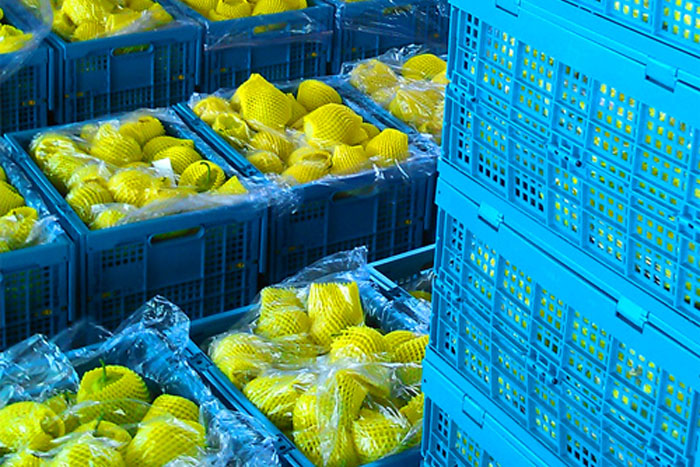
The plastic turnover box for food is generally made of PE or PP, and the product quality m
Learn more >Shandong Junchuang Intelligent Technology CO., LTD
+86-13066013183 (Nonworking Time)
Email Address: tina@sdjcznkj.com
Copyright:Shandong Junchuang Intelligent Technology CO., LTD
Key Word: plastic parts box part box divider foldable plastic warehouse box Stackable Storage Plastic Bin Box Plastic turnover box Plastic Pallet